
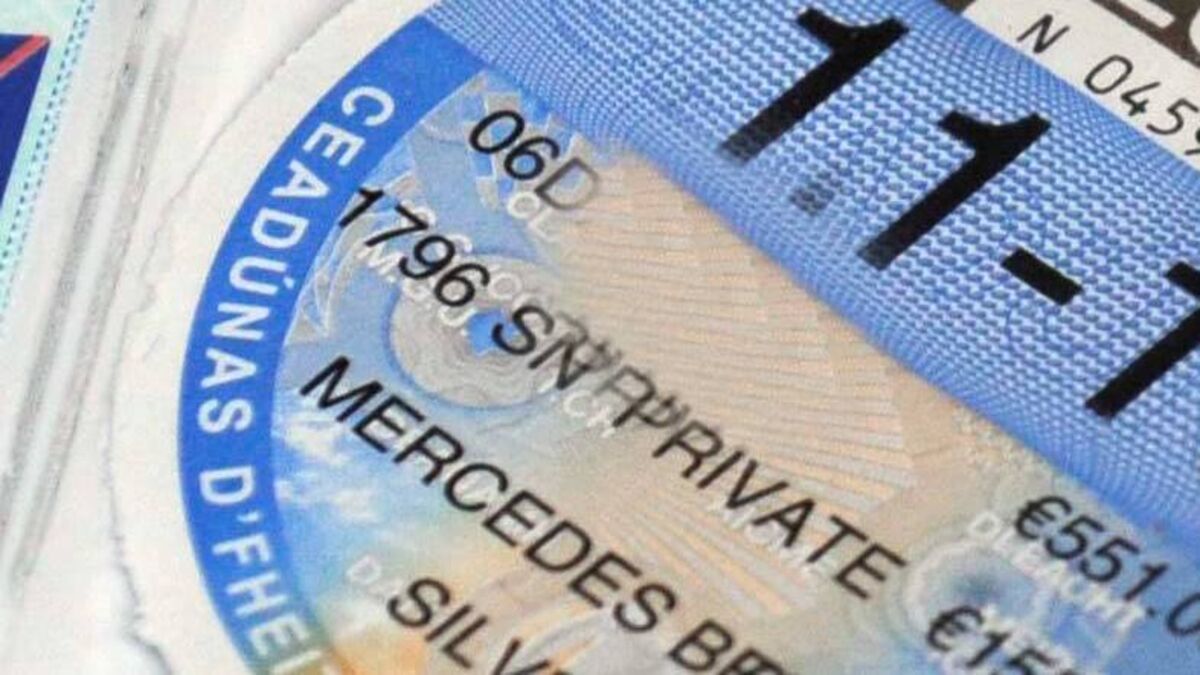
After more than 100 years on Irish windscreens, the paper motor tax disc is being abolished. The government has approved the National Vehicle and Driver File Bill 2025, which removes the legal requirement to display a physical motor tax disc. Here’s everything you need to know.
Why Is the Motor Tax Disc Being Scrapped?
The short answer: technology has made it redundant. An Garda Síochána now uses Automatic Number Plate Recognition (ANPR) cameras that can instantly scan your number plate and check your motor tax status against the National Vehicle and Driver File (NVDF) — the central digital register of all vehicles and licensed drivers in Ireland.
If a garda can verify your tax status in real time from a patrol car, the paper disc on your windscreen serves no practical purpose.
What Is the National Vehicle and Driver File Bill?
The Bill does more than just abolish the tax disc. Its key provisions include:
- Removal of the motor tax disc requirement — no more legal obligation to display the paper disc on your windscreen
- Road collision data sharing — local authorities will gain access to detailed crash data from the RSA and Gardaí, enabling targeted safety improvements at accident blackspots
- Updated GDPR compliance — modernised access arrangements to the NVDF database
- Open-ended off-road declarations — you’ll no longer need to specify an end date when declaring a vehicle off the road (SORN)
When Does It Take Effect?
The Bill has been approved by government and will now proceed through the Oireachtas for formal enactment. There is no confirmed date yet — it depends on parliamentary scheduling. Until the law is formally enacted, you must continue to display your motor tax disc as normal.
Key point: Do not remove your tax disc until this change is officially in force. You can still be fined €60 for not displaying one under current law.
What About Insurance and NCT Discs?
For now, you must still display your insurance disc and NCT disc. However, the government has indicated that similar digital reforms for these documents could follow through secondary legislation once the motor tax Bill is enacted. The long-term direction is towards a fully digital system for all windscreen discs.
Do I Still Need to Pay Motor Tax?
Absolutely yes. The abolition of the disc changes the display requirement only — motor tax remains a legal obligation. You can continue to renew online at motortax.ie or at your local motor tax office. The tax itself funds road maintenance, transport infrastructure, and environmental policy.
2026 Motor Tax Rates at a Glance
| Vehicle Registration Date | Tax Basis | Example |
|---|---|---|
| Before 1 July 2008 | Engine size (cc) | 1.6L petrol: €514/year |
| 1 July 2008 – 31 Dec 2020 | CO₂ emissions (NEDC) | Band A (0–120g): €170/year |
| From 1 Jan 2021 | CO₂ emissions (WLTP) | Band 1 (0g): €120/year |
| Electric Vehicles | Flat rate | €120/year |
What Lessons Can Ireland Learn?
Other countries have already gone through this transition:
- UK (2014) — Saved up to £10 million annually in admin costs, but saw a dip in tax revenue in year one due to awareness gaps. Strong enforcement and communication were needed.
- Sweden (2010) — Smoother transition thanks to robust digital systems and automatic fines for non-compliance.
- Cyprus — Fully digital model, now well-established.
The lesson is clear: a reliable database, effective ANPR coverage, and strong public communication will be critical for a smooth Irish rollout.
What You Should Do Now
- Keep displaying your current tax disc until the law officially changes
- Set up a digital reminder for your tax renewal date — once the disc is gone, there’ll be no physical prompt on your windscreen
- Renew on time — ANPR makes it far easier for gardaí to detect untaxed vehicles, so the chances of being caught have increased significantly
- Check your tax status at motortax.ie to make sure everything is in order
The Bigger Picture for Irish Drivers
This is part of a broader modernisation of Ireland’s vehicle compliance system. Combined with the NCT system and evolving EV incentives, Ireland is gradually building a fully digital framework for vehicle ownership. For used car buyers, it means one less thing to check on the windscreen — but all the more reason to run proper vehicle history checks before purchasing.
This article was published on 30 March 2026 and reflects the latest available information. We’ll update it as the Bill progresses through the Oireachtas.